
Word search puzzles look simple, but they have a clear starting point in modern history.
Word search puzzles began in 1968 when Norman E. Gibat created the first published puzzle for a local newspaper in Norman, Oklahoma.
From that small launch, the idea spread quickly across newspapers, classrooms, and puzzle books.
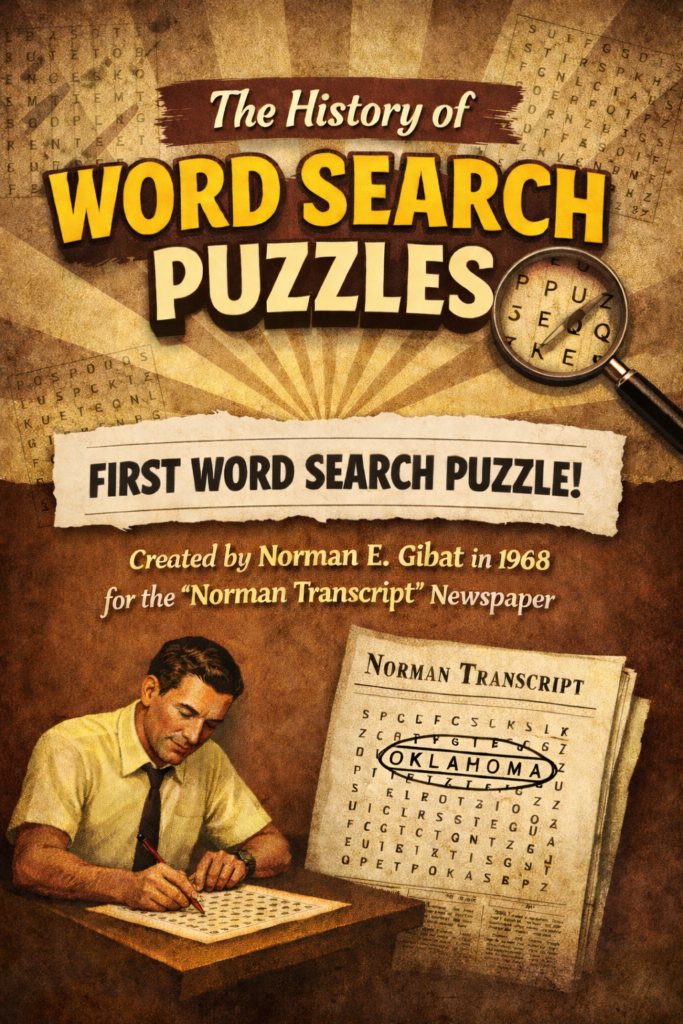
You can trace the early details through the story of Norman E. Gibat’s 1968 puzzle in Oklahoma.
Teachers soon adopted the format to support spelling and vocabulary, which helped it grow beyond entertainment.
As explained in this overview of Word search puzzles and their format, the game centres on finding hidden words inside a letter grid, a structure that made it easy to copy and share.
Over time, the puzzle moved from print to screens.
Digital platforms now generate endless grids and offer new ways to play, yet the core idea remains the same.
Understanding how this simple concept grew into a global pastime gives useful context for its lasting appeal.
Key Takeways
The puzzle began in 1968 in a small American newspaper and spread quickly.
Schools and publishers helped it grow into a worldwide activity.
Digital tools expanded access while keeping the original grid format intact.
Origins of Word Search Puzzles
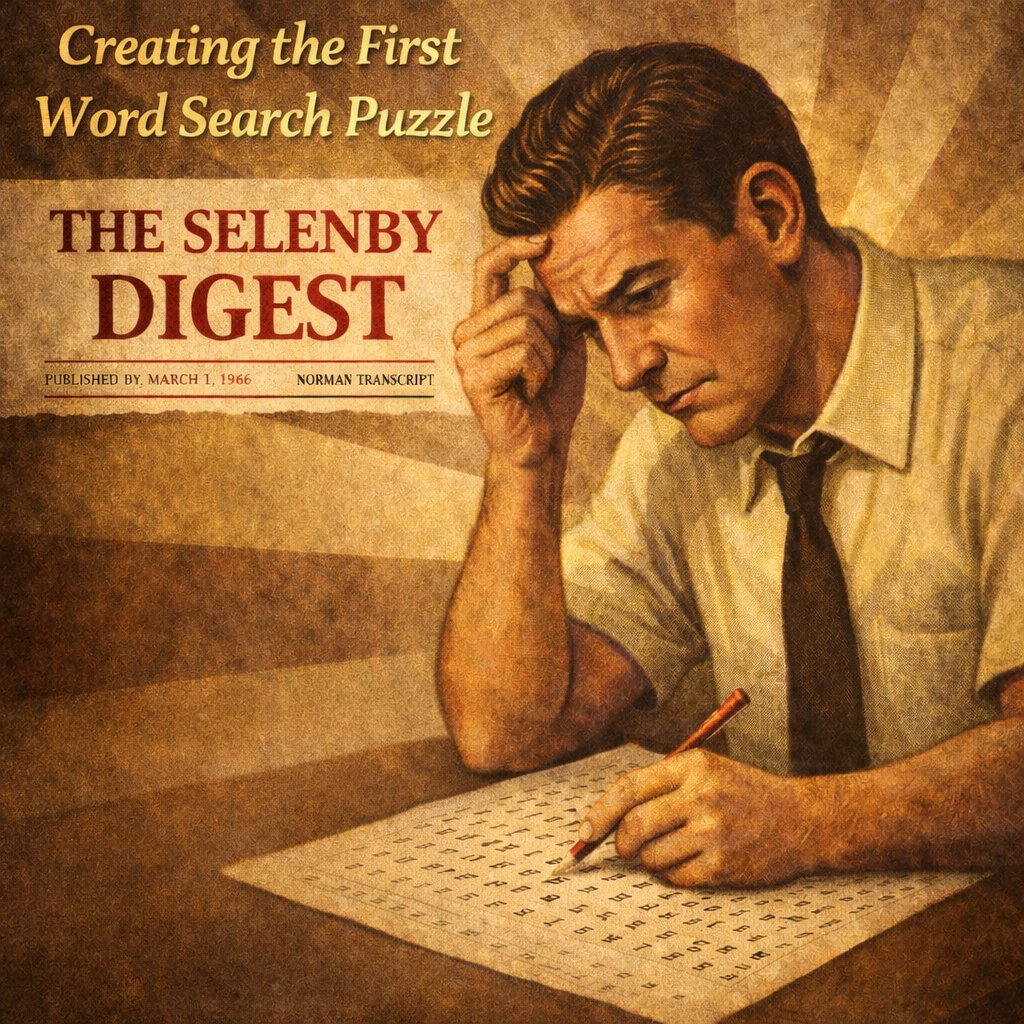
The modern word search began in the United States in the late 1960s. A newspaper editor named Norman E. Gibat played a direct role in its creation and publication.
Norman E. Gibat and The Selenby Digest
Norman E. Gibat created the first widely recognised word search puzzle in 1968. He worked as an editor for The Selenby Digest, a small newspaper in Norman, Oklahoma.
Gibat designed a simple grid of letters with hidden words placed in straight lines. Readers searched for the listed words within the grid. He aimed the puzzle at school pupils, but adults also enjoyed it.
Many accounts of the history of word search puzzles trace the modern format back to Gibat’s publication. His idea spread after teachers shared the puzzle with colleagues in other states.
The Selenby Digest gave the word search its first public platform. From that point, newspapers and puzzle publishers began to copy the format.
Predecessors and Early Influences
Before 1968, people created letter-based puzzles, but they did not match the modern word search structure. Some early puzzles asked readers to rearrange letters or solve hidden messages.
These activities influenced the development of the word search. They showed that readers enjoyed scanning letters and spotting patterns.
However, none used a large grid filled with random letters and a clear word list in the same way. The origins and evolution of word search puzzles show that the format appeared suddenly rather than developing slowly over decades.
Educators also shaped early growth. Teachers saw value in using a history word search or vocabulary grid to support spelling and reading skills.
First Published Word Search Puzzle
The first published word search puzzle appeared in 1968 in The Selenby Digest. It included a square grid and a printed list of words to find.
Readers searched for words placed horizontally, vertically, and diagonally. The puzzle did not allow backwards words at first. Later versions added that feature to increase difficulty.
Within a few years, larger newspapers and magazines adopted the format. The history and evolution of word search puzzles explains how teachers and publishers helped the puzzle reach a wider audience.
From that first word search puzzle, the format stayed simple:
- A grid of letters
- A defined word list
- Straight-line word placement
This clear structure shaped the history word search fans recognise today.
Global Spread and Early Development
Word search puzzles moved quickly from a local classroom idea to a regular feature in schools and print media.
Educators, editors, and publishers shaped their early growth and helped them reach readers across different countries and languages.
Adoption in Education
Teachers adopted word search puzzles because they were simple to create and easy for pupils to understand.
A grid of letters could reinforce spelling lists, history terms, or science vocabulary without long instructions.
Schools used them for vocabulary building, revision tasks, and quiet classroom work.
Unlike crosswords, pupils did not need detailed clues or broad general knowledge. They only needed to recognise and spell the target words.
This made word search games useful for mixed ability classes. Strong readers could work faster, while others could focus on letter patterns and word recognition.
As interest grew in the late 1960s and 1970s, educators shared ideas through teaching magazines and local papers.
The spread of the puzzle beyond its original classroom setting is outlined in the history of word search puzzles, which traces its path from a 1968 newspaper feature to wider educational use.
Rise in Newspapers and Magazines
Newspapers helped turn word search puzzles into a daily habit. Editors added them to puzzle pages alongside crosswords, which already had loyal readers.
Publishers valued word search games because they appealed to both children and adults. They required less specialist knowledge than crosswords and took up flexible space on a page.
By the early 1970s, major papers and puzzle books featured them regularly. According to the history of word search puzzles, their format suited newspapers well because editors could adjust grid size and difficulty with ease.
Magazines soon followed. Children’s publications used themed puzzles based on animals, sports, or holidays. Adult magazines offered larger grids and longer word lists.
This print exposure normalised word search puzzles as a standard pastime. Regular publication built a steady audience and encouraged the creation of dedicated puzzle books.
Cultural Variations and International Appeal
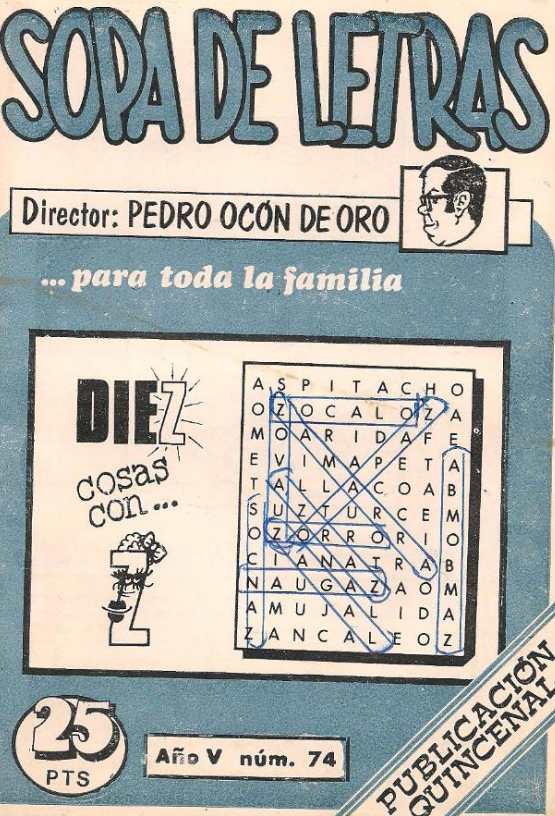
As word search puzzles travelled beyond the United States, publishers adapted them to local languages and traditions.
In Spanish-speaking countries, they became known as sopa de letras or sopas de letras.
Spanish puzzle makers, including figures such as Pedro Ocón de Oro, helped popularise the format in Europe and Latin America. They integrated the puzzle into newspapers, schoolbooks, and standalone collections.
The basic structure stayed the same: a letter grid with hidden words placed horizontally, vertically, or diagonally. Yet the themes changed to reflect local culture, history, and language.
Because the rules were simple, translation required little adjustment. Publishers could replace the word list while keeping the same layout.
This flexibility allowed word search puzzles to cross borders with ease. Their clear format and focus on spelling made them adaptable tools for both leisure and learning in many countries.
Evolution Through the Decades
Word search puzzles moved from classroom tools to global entertainment within a few decades. Print media, commercial publishers, and later digital tools shaped their growth and changed how people created and solved them.
Mainstream Popularity in the 1970s and 1980s
During the early 1970s, word searches began appearing in local newspapers. Editors placed them beside the crossword and other word puzzles, which helped readers see them as a regular feature rather than a novelty.
By the mid to late 1970s, national newspapers and magazines included them in weekly puzzle sections. Their simple rules set them apart from crosswords, which often required broad vocabulary and general knowledge.
In the 1980s, schools widely adopted word searches as teaching aids. Teachers used themed grids to reinforce spelling lists, history terms, and science vocabulary. Children’s activity books also featured them, often alongside mazes and logic puzzles.
This period marked a key stage in the history of word search, as the format became familiar to families, students, and casual puzzle fans.
Commercial Publishing Boom
As demand increased, publishers released dedicated word search books. These books grouped puzzles by theme, difficulty, or audience, such as travel, sport, or seasonal topics.
Several trends shaped this boom:
- Themed collections focused on hobbies or school subjects
- Large-print editions aimed at older readers
- Children’s series with simple grids and short word lists
Unlike crosswords, word searches did not require complex clues. This reduced editing time and production costs. Publishers could produce high volumes quickly, which made the format attractive in a competitive puzzle market.
By the late 1980s, bookshops and supermarkets regularly stocked inexpensive word search paperbacks. The puzzle format had secured a stable place in the wider world of word puzzles.
Technological Advances in Puzzle Creation
Early creators built grids by hand, placing words first and filling gaps with random letters. This process took time and limited how many puzzles a publisher could produce.
In the 1980s and 1990s, computer software changed that process. Programmes could:
- Automatically place words horizontally, vertically, and diagonally
- Adjust grid size to match difficulty
- Generate multiple puzzles from one word list
These tools improved accuracy and speed. They also allowed editors to experiment with new puzzle formats, such as hidden messages and shaped grids.
As personal computers became common, teachers and hobbyists created custom word searches at home. Technology did not change the core idea, but it expanded who could design and publish them.
Digital Transformation and Online Era
Digital technology changed how people create, share, and play word search puzzles. Computers, websites, and mobile devices expanded access and added new features that print formats could not offer.
Introduction of Online Word Search
The internet reshaped the puzzle in the late 20th century. Early computer versions appeared in the 1970s and 1980s, and websites soon made puzzles available to anyone with a connection, as explained in the history and evolution of the word search puzzle phenomenon.
Online word search platforms removed the limits of paper. Players no longer needed a newspaper or puzzle book. They could load a grid instantly, restart it, or generate a new one in seconds.
Web tools also let users create custom puzzles. Teachers could enter vocabulary lists and print worksheets. Families could build themed puzzles for events or holidays.
Key changes included:
Instant puzzle generation
Adjustable grid sizes
Timers and automatic word checks
Easy sharing by link or email
These features shifted word searches from static pages to interactive activities.
Emergence of Puzzle Apps
Smartphones pushed the format further. Puzzle apps placed word searches in users’ pockets and allowed play at any time.
Many modern apps include daily challenges, progress tracking, and themed events. Some add multiplayer options and global leaderboards, as noted in the history behind word search puzzles. Players can compete with friends or strangers in real time.
Apps also use touch controls. Players swipe across letters instead of circling them with a pen. The app highlights correct words and tracks completion time.
Common app features include:
Hints for difficult words
Timed modes
Level systems
Achievement badges
These additions keep the core idea intact while adding structure and replay value.
Role of Websites and Platforms
Dedicated websites now act as hubs for large puzzle libraries. Platforms such as WordSearchPuzzle.net’s overview of print to digital evolution describe how sites moved the format from paper books to interactive screens.
Websites often organise puzzles by theme, age group, or difficulty. This structure helps teachers, parents, and casual players find suitable content quickly.
Some platforms offer both printable PDFs and online play. This dual format supports classroom use and home entertainment.
Modern sites may also provide:
| Feature | Purpose |
|---|---|
| Puzzle generators | Create custom word lists |
| Save progress tools | Continue later on the same device |
| Cross-device access | Play on phone, tablet, or computer |
These platforms anchor the online word search space. They combine accessibility, customisation, and large content libraries in one place.
Educational and Cognitive Impact
Word search puzzles support measurable skill development in reading, memory, and focus. Schools and researchers continue to use them because they strengthen vocabulary building, attention to detail, and structured problem-solving.
Cognitive Benefits for All Ages
Regular use of word search puzzles strengthens key cognitive benefits linked to literacy and memory. Studies and educational reports note gains in verbal reasoning, working memory, and processing speed, which support academic progress and daily tasks.
The article on the educational impact of word search puzzles explains that students who practise these puzzles often show stronger recall and quicker word recognition.
Adults also benefit. Pattern scanning keeps the brain active, and research summaries such as the history of word search puzzles and cognitive skills connect regular puzzle use with improvements in logical reasoning and memory retention.
For older adults, consistent engagement helps maintain mental sharpness. The task requires scanning, matching, and verifying letters, which keeps attention focused and organised.
Key cognitive gains include:
Stronger working memory
Faster visual scanning
Improved vocabulary recall
Better sustained concentration
Classroom Integration and Learning
Teachers use word searches as structured tools for vocabulary building. Pupils search for subject-specific terms, which reinforces spelling and word recognition through repetition.
Reports such as the effectiveness of word search puzzles in improving students’ vocabulary show measurable vocabulary growth when puzzles support formal lessons.
In practical classroom use, teachers often:
- Introduce new keywords in a lesson.
- Reinforce them with a themed word search.
- Review definitions after completion.
This approach strengthens recall because pupils must visually confirm each letter in sequence. The act of searching slows reading just enough to improve spelling accuracy.
Word searches also support independent learning. Pupils can complete them without constant supervision, which builds confidence and self-checking habits.
Attention to Detail and Problem-Solving
Every puzzle demands precise attention to detail. A single incorrect letter can lead to a false match, so players must verify each word carefully.
This repeated checking improves visual discrimination skills. Learners scan rows, columns, and diagonals while filtering out distractions. That process trains the brain to focus on relevant patterns.
Word searches also promote structured problem-solving. Players often:
Scan systematically from left to right.
Identify uncommon letters first, such as Q or Z.
Mark confirmed words to reduce clutter.
These strategies mirror basic analytical thinking. The player forms a plan, tests it, and adjusts when needed.
Over time, this habit of careful scanning and correction supports better proofreading skills and more accurate reading in everyday tasks.
Cultural Phenomenon and Lasting Legacy
Word search puzzles moved beyond simple print games and became a clear puzzle phenomenon. They shaped popular wordplay, gained global reach, and inspired many new formats, including links to crosswords and digital games.
Puzzle Phenomenon in Popular Culture
Word searches became common in newspapers, magazines, and puzzle books across the world. Publishers valued them because they were easy to print and simple to understand.
Unlike crosswords, they did not require clues, which made them quick to solve and accessible to a wide age range.
Many writers note the growing cultural impact of word searches in print and online media, as described in this overview of the history of word search puzzles.
Editors often placed them beside crosswords to attract readers who preferred straightforward wordplay.
Television programmes, classroom worksheets, and themed puzzle books also helped.
People created custom grids for holidays, sports events, and school topics.
This steady presence in daily life turned the word search into a recognised puzzle phenomenon rather than a short‑lived trend.
International Recognition
Word searches spread quickly outside the United States during the late twentieth century.
Newspapers in Europe, Australia, and parts of Asia added them to weekend editions. Their rules did not rely on complex language clues, so translators only needed to adjust the word lists.
Many accounts of the history and evolution of the word search puzzle phenomenon point to this simplicity as a key reason for global growth. Schools adopted them to support spelling practice and vocabulary building.
Digital platforms increased their reach even more. Websites and mobile apps allowed users to play in different languages. This global access strengthened their place alongside crosswords and other forms of wordplay as standard features of modern puzzle culture.
Adaptations and Spin-Offs
Publishers and developers expanded the format with themed grids, timed challenges, and competitive scoring. Some versions hide words backwards or diagonally, while others add bonus words not listed in advance. These small changes keep the core idea intact while adding variety.
Online creators explain how word searches appear on digital platforms and in social media sharing tools, as shown in this review of the history of word search puzzles on online platforms. Players can now generate custom puzzles in seconds.
The format also inspired hybrids. Designers blended elements of crosswords, codewords, and other wordplay into new layouts. While the rules evolve, the main task remains clear: find hidden words in a grid. This stable structure supports ongoing adaptation without losing identity.
The Future of Word Search Puzzles
The future of word search shows steady growth through digital tools and tailored play. Developers now blend classic grids with smart features that adjust to each player’s device and skill level.
Technological Innovations
Digital platforms continue to shape the future of word search. Many sites already offer timed modes, hints, and score tracking, as seen in the shift described in the digital transformation of word search puzzles.
Mobile apps now support touch controls, drag selection, and instant feedback. Players can complete puzzles on phones, tablets, laptops, and even interactive whiteboards in classrooms.
Some developers test artificial intelligence to build grids in seconds. AI can adjust word placement, reduce repetition, and balance difficulty.
Augmented reality may also play a role. A player could scan a surface and see a floating grid, then tap words in real space.
While still limited, this technology shows how the format can move beyond paper without changing its core rules.
| Innovation | Practical Benefit |
|---|---|
| AI grid creation | Faster puzzle generation |
| Cloud saving | Play across devices |
| AR features | Interactive visual play |
Personalisation and Interactivity
Personalisation stands at the centre of the future of word search. Modern platforms allow users to choose grid size, theme, and difficulty.
A beginner might select a small 8×8 grid with simple vocabulary. An advanced player may prefer a 20×20 grid with diagonal and backward words.
Teachers also create custom lists linked to lessons. This method supports spelling practice, topic revision, and language learning in a direct way.
Interactive features add social elements. Players can compete on leaderboards, share results, or challenge friends in real time. Some systems track progress and suggest harder puzzles as skills improve.
These changes keep the format simple while giving players more control over how, when, and why they play.
Frequently Asked Questions
Word search puzzles began in the late 1960s and quickly spread through newspapers and classrooms. They later moved to computers, websites, and mobile apps, which changed how people create and solve them.
What is the origin of the word search puzzle?
The modern word search puzzle appeared in the United States in 1968. It first ran in a small local publication in Oklahoma.
Some historians note that similar puzzles existed earlier in Spain under the name “Sopas de letras”. These early versions helped shape the format people recognise today.
A detailed account of these early developments appears in The Fascinating History of Word Search Puzzles.
Who created the first known word search, and when?
Norman E. Gibat created the first widely recognised word search in 1968. He published it in the Selenby Digest, a local newspaper in Norman, Oklahoma.
He titled it the “Word-Cross Puzzle”. The simple grid of hidden words drew strong interest from readers and led to wider publication.
How have word search puzzles evolved over time?
Publishers first printed word searches in newspapers and puzzle books. By the 1970s and 1980s, larger newspapers and magazines carried them regularly.
Grid sizes grew to match different skill levels. New variants appeared, but they kept the basic rule of finding listed words hidden in a letter grid.
An overview of these changes appears in the origin and history of Word Search puzzles.
What impact have word search puzzles had on educational practices?
Teachers began using word searches in classrooms during the 1970s and 1980s. They used them to teach spelling, vocabulary, and subject terms.
These puzzles help pupils recognise patterns and reinforce word meaning through repetition. Schools still include them in worksheets and revision packs.
Education sites note how teachers adopted them to support literacy skills in The History of Word Search Puzzles.
In what ways have digital platforms transformed the traditional word search game?
Developers moved word searches onto computers in the late 20th century. Later, websites and mobile apps made them easy to access at any time.
Digital versions offer features such as timed modes, themed packs, and automatic word highlighting. Some platforms also allow users to generate custom puzzles instantly.
Several accounts describe this shift from print to online play in The Fascinating History of Word Search Puzzles.
Can you detail significant milestones in the history of word search puzzles?
In 1968, Norman E. Gibat published the first known modern word search. Within a few years, major newspapers began printing similar puzzles.
During the 1970s and 1980s, schools adopted them as teaching tools. The rise of home computers and the internet later expanded their reach.
More recently, mobile apps and online platforms have made word searches available worldwide. These stages mark the key shifts from local print puzzle to global digital game.
Visit our Word Search Puzzle Books